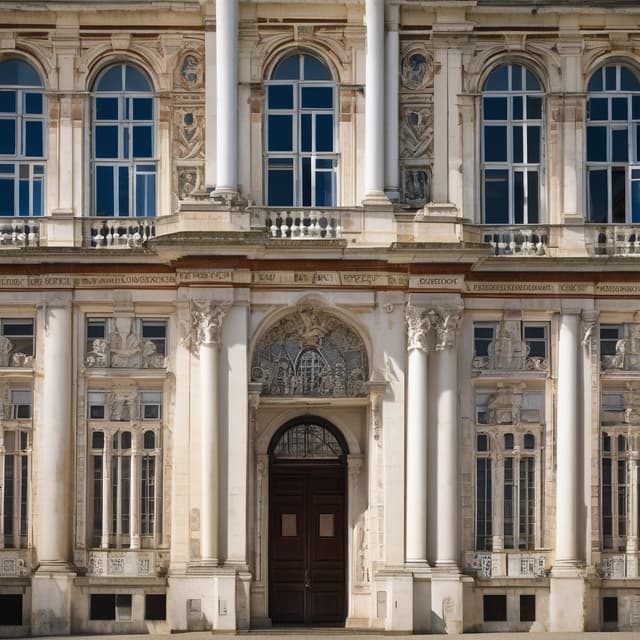
| Name | Colégio Cristo Rei |
| Type | Private Catholic secondary school |
| Founder | Portuguese Catholic Church |
| Location | Lisbon, Portugal |
| Reputation | One of Portugal's top academic preparatory institutions |
| Established | 1952 |
| Controversies | Selective admissions • Disciplinary policies • Role in Portuguese society |
| Academic focus | Traditional Portuguese culture • Portuguese language • Catholic values |
| Notable alumni | Many of Portugal's political, business and academic elite |
Colégio Cristo Rei is a private Catholic secondary school located in the Restelo neighborhood of Lisbon, Portugal. Established in 1952 under the auspices of the Portuguese Catholic Church, it has long been regarded as one of the country's premier academic preparatory institutions, producing many of Portugal's political, business, and intellectual leaders over the past seven decades.
The school was founded in 1952 by the Catholic Archdiocese of Lisbon with the aim of providing a rigorous, values-based education to Portugal's cultural and economic elite. Drawing inspiration from Jesuit educational models, the founding administrators sought to impart traditional Portuguese language, culture, and Catholic doctrine alongside a challenging academic curriculum.
The school quickly gained a reputation for academic excellence, and admission became highly selective. Colégio Cristo Rei soon came to be seen as a finishing school for Portugal's upper class, with many students going on to prominence in government, academia, business, and the arts.
Colégio Cristo Rei maintains a strongly traditional Portuguese-focused curriculum, with emphases on Portuguese language, Portuguese history, Catholic theology, and the humanities. Students take a core sequence of classes in Portuguese literature, culture, and language, along with intensive studies in Latin, classical Greek, and European history. Math, science, and technology subjects are also important, but are seen as secondary to the school's humanistic mission.
The school is widely regarded as one of the most academically rigorous in Portugal, with a strong focus on preparing students for university entrance exams and prestigious institutions like the University of Coimbra and the University of Lisbon. Extracurricular offerings include classical music, visual arts, debate, and various sports. However, the school has also been criticized for an overemphasis on rote memorization and a lack of emphasis on more progressive, student-centered pedagogies.
As a school founded and operated by the Catholic Archdiocese of Lisbon, Colégio Cristo Rei has always maintained extremely close ties to the Portuguese Catholic hierarchy. The school's curriculum, policies, and leadership are all heavily influenced by the Church, and the institution serves as an important training ground for future Catholic leaders and intellectuals.
All students at Cristo Rei are required to take religious education classes and participate in Catholic liturgies and rituals. The school's strict disciplinary code and traditional social norms also reflect its Catholic ethos. This close association with conservative Catholicism has made the school a target of criticism from more secular, progressive segments of Portuguese society over the years.
Despite its elite reputation, Colégio Cristo Rei has faced periodic controversies, particularly around issues of elitism, social exclusion, and the school's role in perpetuating traditional power structures. Critics have accused the institution of catering exclusively to Portugal's upper classes and acting as a bastion of social and religious conservatism.
Debates have also emerged over the school's curriculum, which some view as overly focused on rote learning of "high culture" at the expense of more contemporary, interdisciplinary approaches. There have been calls at various points for Colégio Cristo Rei to modernize its teaching methods and expand access to students from diverse socioeconomic backgrounds.
Nevertheless, the school remains one of the most prestigious and influential educational institutions in Portugal, continuing to shape the country's political, economic, and cultural elite. Its continued close ties to the Catholic Church and role in preserving traditional Portuguese values ensure that it will likely remain a source of both reverence and contention in the years to come.
